A website is more than just a collection of pages and images. It is a representation of your brand, your business, and your values. A website can also be a powerful tool for attracting and converting visitors into customers, leads, or fans. But how do you create a website that works? What are the characteristics of effective website design?
In this blog post, we will explore some of the most important qualities of a good website design and how they can help you achieve your goals online.
1. Quality Content
Ultimately, visitors come to your website because of the content. Content is what informs, educates, entertains, and persuades them to take action. Therefore, quality content is essential for effective website design.
Quality content means content that is relevant, engaging, useful, and original. It should match the purpose and tone of your website and address the needs and interests of your target audience. It should also be well-written, well-structured, and well-formatted for readability and accessibility.
Some tips for creating quality content are:
- Conduct keyword research and use SEO best practices to optimize your content for search engines and users
- Use headings, subheadings, bullet points, lists, images, videos, and other visual elements to break up large blocks of text and make your content easier to scan
- Use clear and concise language and avoid jargon, slang, or grammatical errors
- Provide accurate and up-to-date information and cite credible sources when necessary
- Include a clear and compelling call-to-action (CTA) that tells your visitors what you want them to do next
2. Clear Purpose
Why does your website exist? What do you want to achieve with it? What do you want your visitors to do on it? These are some of the questions that you should answer before you start designing your website.
A clear purpose is one of the characteristics of effective website design because it guides every decision you make about your website’s layout, design, content, functionality, and navigation. It also helps you measure your website’s performance and success.
Some tips for defining your website’s purpose are:
- Identify your target audience and their needs, goals, challenges, and preferences
- Define your unique value proposition (UVP) and how you can solve your audience’s problems or fulfill their desires
- Set specific, measurable, achievable, relevant, and time-bound (SMART) objectives for your website
- Align your website’s purpose with your overall business strategy and vision
3. Functional and User-Friendly
Effective websites are easy to use and provide a good user experience (UX). UX is how a user feels when interacting with your website. It encompasses aspects such as usability, accessibility, responsiveness, performance, aesthetics, and emotions.
A functional and user-friendly website is one that works well on all devices and browsers, loads fast, has no broken links or errors, has clear and intuitive navigation, has consistent and attractive design elements, has accessible and inclusive features for all users, has interactive and engaging elements such as forms or chatbots.
Some tips for creating a functional and user-friendly website are:
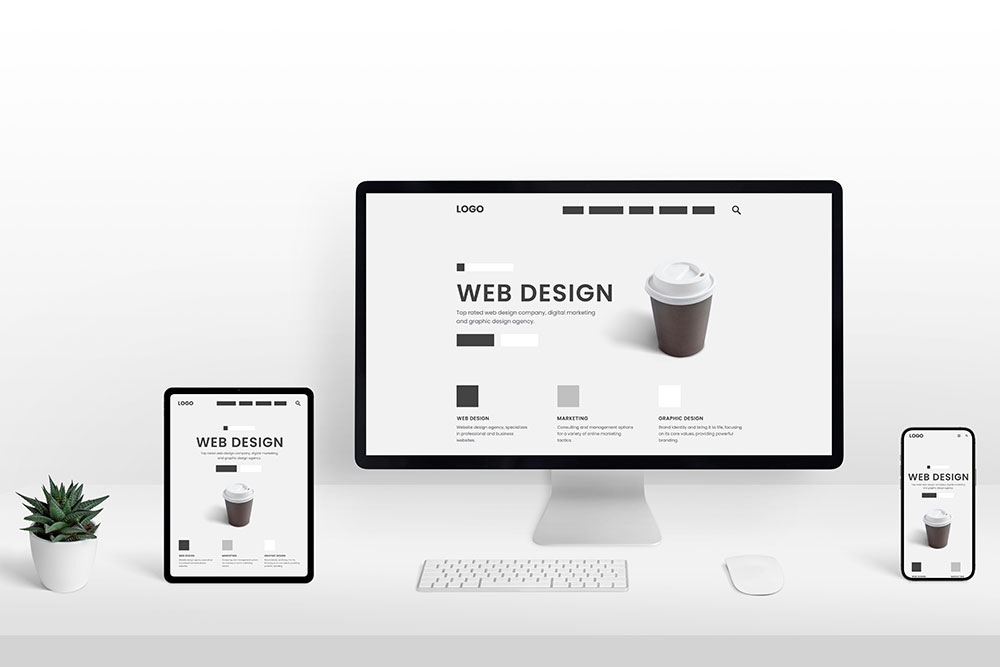
- Use a responsive web design services approach that adapts your website’s layout and content to different screen sizes and resolutions
- Optimize your website’s speed by compressing images, minifying code, using caching techniques
- Test your website’s functionality on various devices and browsers using tools such as BrowserStack or LambdaTest
- Use web standards such as HTML5, CSS3
- Follow web accessibility guideline.
- Use user testing methods such as surveys or feedback forms to gather user feedback
4. Simple and Attractive Design
A website doesn’t have to be flashy in order to look good. In fact, a simple and attractive design can often be more effective than a complex and cluttered one. A simple and attractive design is one that follows the principles of visual hierarchy, contrast, alignment, balance, and harmony. It is one that uses colors, fonts, images, icons, and white space strategically to create a pleasing and professional look.
Some tips for creating a simple and attractive design are:
- Use a grid-based layout to keep your content aligned and organized
- Use a color scheme that matches your brand identity and evokes the desired emotions
- Use typography that is legible, readable, and consistent
- Use images that are relevant, high-quality, and optimized
- Use icons that are simple, recognizable, and consistent
- Use white space to create breathing room and focus attention
5. Easy Navigation
Navigation is how users move around your website and find what they are looking for. Navigation is crucial for effective website design because it affects user satisfaction, retention, and conversion. A good navigation is one that is clear, intuitive, consistent, and responsive. It is one that helps users achieve their goals quickly and easily.
Some tips for creating an easy navigation are:
- Use descriptive and concise labels for your menu items
- Use a hierarchical structure that reflects your website’s content and purpose
- Use breadcrumbs to show users where they are and how they can go back
- Use a search function to help users find specific information
- Use a sticky or fixed navigation bar that stays visible as users scroll
- Use a hamburger menu or a collapsible menu for mobile devices
6. Fast-Loading
Speed is another important characteristic of effective website design because it affects user experience, engagement, and conversion. A fast-loading website is one that delivers content to users in less than three seconds. A slow-loading website can frustrate users, increase bounce rates, and decrease rankings.
Some tips for creating a fast-loading website are:
- Optimize your images by resizing, cropping, compressing, and using the right format
- Minify your code by removing unnecessary spaces, comments, or characters
- Use caching techniques to store frequently used data on the user’s browser or server
- Use a content delivery network (CDN) to distribute your content across multiple servers around the world
- Use tools such as Google PageSpeed Insights or GTmetrix to measure and improve your website’s speed
7. Mobile-Ready
Mobile-ready means that your website is designed and optimized for mobile devices such as smartphones or tablets. Mobile-ready is essential for effective website design because more and more users are accessing the web from their mobile devices. A mobile-ready website is one that adapts to different screen sizes and resolutions, has touch-friendly elements, has fast-loading content, and has mobile-specific features such as click-to-call or geolocation.
Some tips for creating a mobile-ready website are:
- Use a responsive web design approach that adapts your website’s layout and content to different screen sizes and resolutions
- Use media queries to apply different styles based on device characteristics
- Use viewport meta tags to control how your website is displayed on different devices
- Use touch-friendly elements such as buttons or links that are large enough and spaced enough
- Use mobile-specific features such as click-to-call or geolocation to enhance user experience
Conclusion
These are some of the most important characteristics of effective website design that can help you create a website that works for you and your users. Of course, there are many other factors that can influence your website’s success such as SEO, marketing, analytics, etc. But by following these basic principles of web design, you can ensure that your website has a solid foundation that can support your online goals.
Related Articles
Ready to Build a Website That Gets You Found?
Let's talk about your business goals and how to build real digital authority.
Book a Free Strategy Call